Choosing a Modern Hanukkiah Silver Piece
Updated for Hanukkah 5787 (December 4, 2026)
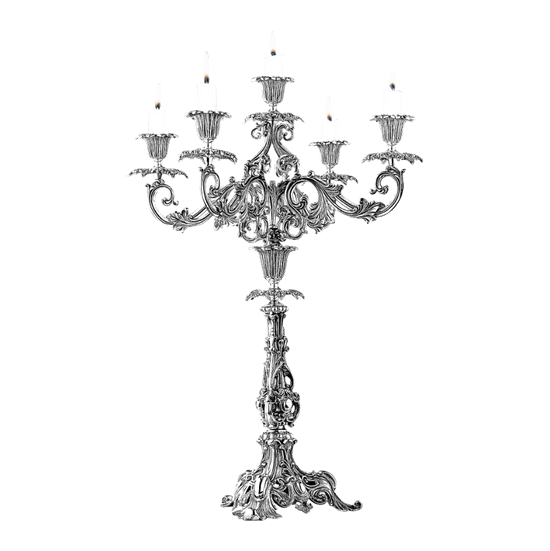
The right modern hanukkiah silver piece changes the atmosphere of Hanukkah before the candles are even lit. It sits at the center of the room as both ritual object and sculptural presence - something guests notice immediately, and something family members remember long after the holiday ends. In a luxury home, a hanukkiah should do more than hold candles. It should carry lineage, refinement, and the quiet confidence of exceptional craftsmanship.
For discerning collectors and families alike, silver remains the material that most fully honors that role. It has weight, luminosity, and permanence. Unlike trend-driven finishes that can feel dated within a few seasons, sterling silver matures beautifully. It develops character over time, reflecting years of celebrations, gatherings, and inherited memory. That is why a modern design in silver feels so compelling. It allows tradition to remain intact while the form speaks in a language that feels current, architectural, and deeply personal.
What makes a modern hanukkiah silver design feel truly modern
Modern design is often misunderstood as stark or cold. In fine Judaica, that is rarely the goal. A truly modern hanukkiah silver design tends to be defined by clarity rather than excess. The silhouette is more disciplined. Ornament, if present, is intentional. Proportions are carefully controlled, and the overall composition feels resolved from every angle.
That might mean a linear form with precise spacing between branches. It might mean a bold geometric base that gives the piece visual gravity. In other cases, it appears in subtle ways - a softened edge, a cleaner profile, or a dialogue between polished and matte surfaces. The modernity is not about rejecting tradition. It is about refining it.
For luxury buyers, this distinction matters. There is a difference between a hanukkiah that follows a passing design trend and one that interprets timeless ritual through a contemporary lens. The first may look fashionable for a moment. The second has the presence to remain relevant for decades.
Why silver remains the material of distinction
Sterling silver is the natural material for a Hanukkah menorah meant to last generations. It responds to candlelight in ways no other material can, it can be restored and engraved decades later, and its value — both symbolic and material — only grows with time.
Among precious materials used in Judaica, sterling silver occupies a singular place. It has long been associated with ceremonial beauty, but it also offers practical and aesthetic advantages that make it especially suited to a hanukkiah intended for lasting use.
Silver responds to light in a way few other materials can. During Hanukkah, when the flames are the emotional center of the room, that quality becomes especially powerful. Candlelight does not merely sit on the surface of sterling silver. It travels across it, producing warmth, depth, and movement. The object becomes animated.
There is also the matter of permanence. A luxury hanukkiah should not feel disposable or decorative in the casual sense. It should possess enough substance to remain part of a family’s ritual life for generations. Sterling silver supports that expectation. It can be maintained, restored, engraved, and passed down. Its value is not only visual. It is material, symbolic, and enduring.
That said, silver asks something of its owner. It requires care and respect. Some collectors love this because maintenance becomes part of stewardship. Others prefer finishes that ask less. Neither preference is wrong, but for those who are building a serious Judaica collection, silver often feels worth the attention it requires.
Craftsmanship is where luxury reveals itself
At a distance, many hanukkiot can appear beautiful. The difference becomes clear when you look closely. Fine craftsmanship announces itself in the details - in the balance of the form, the precision of the candle cups, the smoothness of the joins, the consistency of the finish, and the way the piece feels in the hand.
This is especially important with modern forms. Ornament can sometimes conceal mediocre work. Minimalism cannot. When a design is clean, every proportion matters. Every line is exposed. Every surface must be deliberate. A modern hanukkiah in silver leaves no place for imprecision to hide.
That is why master silversmithing remains central to luxury Judaica. The finest pieces are not simply manufactured objects. They are the result of judgment developed over decades - an understanding of scale, weight, engineering, and aesthetic restraint. This is the level at which a ritual object becomes a masterpiece.
For clients who are commissioning a custom piece, craftsmanship matters even more. Personalization should never feel applied after the fact. A family name, a symbolic motif, a dedication, or a tailored structure must be integrated into the work so naturally that the piece feels whole from the beginning. That kind of refinement only comes from true artisan practice.
Modern menorah silver for different interiors
A well-chosen sterling silver menorah works in any home — contemporary, traditional, or somewhere in between. The key is matching scale and proportion to the space where it will stand.
One reason modern silver hanukkiot are so sought after is their versatility. They can live beautifully in homes with very different visual languages, provided the piece is chosen with sensitivity.
In a contemporary interior, a bold architectural hanukkiah can hold its own among clean lines, gallery walls, and sculptural furnishings. It becomes part of the design conversation without losing its ceremonial authority. In a more traditional home, a modern silver piece can create an elegant contrast. It introduces freshness while remaining rooted in familiar material and ritual meaning.
This is where proportion becomes essential. A grand dining table, a formal entry, or a large entertaining space may call for a piece with commanding scale and visual presence. A smaller urban setting may benefit from a hanukkiah with quieter refinement and flawless detail. Luxury is not always about size. Often, it is about choosing a form that belongs perfectly in its setting.
Browse the full range — from architectural minimalism to classical filigree — in our sterling silver Hanukkah menorah collection.
When personalization adds real value
Not every hanukkiah needs customization, but in the luxury market, personalization can transform a beautiful object into a family landmark. The strongest custom work does not overwhelm the design. It gives the piece a private layer of meaning.
An inscription marking an anniversary, a wedding, or a generational gift can turn the hanukkiah into an heirloom from the moment it is received. A bespoke interpretation of a family motif, a city skyline, or an architectural influence can create something truly one of a kind. For some families, the value lies in creating a future inheritance. For others, it lies in commemorating a specific chapter of life with extraordinary permanence.
There is, however, a balance to consider. The more specific a design becomes, the more intimate its appeal. That can be exactly what a client wants. Yet some collectors prefer a degree of restraint so the piece remains universal across generations. The right decision depends on whether the hanukkiah is meant to mark a singular story or serve as a broader family symbol.
How to recognize heirloom potential
A luxury menorah should feel significant now and still feel significant in thirty years. That standard eliminates many pieces immediately. Heirloom potential is not created by price alone. It comes from the meeting point of design integrity, material excellence, emotional meaning, and artisanal execution.
Ask whether the piece has a timeless foundation beneath its modern profile. Ask whether the silver is substantial enough to justify its presence. Ask whether the craftsmanship will still impress when examined closely year after year. Most importantly, ask whether the object carries emotional gravity. Families pass down what means something to them. Beauty helps, but meaning is what secures permanence.
This is why many clients gravitate toward handcrafted work rather than generic luxury. An object shaped by a master carries a human signature, even when that signature is not literal. It feels considered. It feels authored. That quality is difficult to replicate and easy to recognize.
The emotional role of a Hanukkah centerpiece
Hanukkah is intimate, but it is also highly visible. The hanukkiah becomes the focal point of evenings spent with children, guests, and memory. It appears in photographs, in blessings, in table settings, and in the small ritual repetitions that families treasure. Over time, the object gathers emotional layers far beyond its formal design.
That is why selection should never be rushed. A hanukkiah at this level is not just a seasonal purchase. It is part of how a family chooses to express reverence, taste, and continuity. For some, that may lead to a restrained silver form of extraordinary purity. For others, it may lead to a bespoke work created in collaboration with an established master such as Piece by Zion Hadad. Either way, the goal is the same: to choose something worthy of the tradition it serves.
The finest modern silver hanukkiot succeed because they do not force a choice between heritage and design. They honor both. And when that balance is achieved, the piece does more than illuminate eight nights. It gives lasting form to the kind of legacy a family can see, hold, and one day pass on.
Explore the sterling silver menorah collection · Hanukkah 5787 begins December 4
A note on caring for your silver menorah
Sterling silver requires only basic care to last generations. After each night of Hanukkah, let any wax soften in warm water rather than scraping it. For tarnish, a dedicated silver cloth is all you need. Avoid chemical dips — they strip silver over time.
For a complete care guide, including how to store silver between holidays: How to Make Sure Your Silver Stays Clean and Pristine.
Frequently asked questions
What is the difference between a menorah and a hanukkiah?
A menorah has seven branches and originates in the Temple in Jerusalem. A hanukkiah (also called a Hanukkah menorah) has nine — eight for the nights of Hanukkah plus the shamash, the helper candle used to light the others. In everyday use, both terms are common, but the nine-branch form is the one used for the holiday.
How do I know if a silver menorah is real sterling silver?
Look for a 925 or Sterling hallmark stamped on the base or underside. Sterling silver also feels noticeably heavier than plated pieces. If you see wear spots showing a different-colored metal underneath, the piece is plated rather than solid. Read the full identification guide.
How much does a sterling silver hanukkiah cost?
Most menorahs in our collection show a price on the website. Price depends on the weight of the silver, the complexity of the design, and the artist — sterling silver hanukkiot typically start at several hundred dollars and can reach into the thousands. Custom commissions are priced individually. Browse the collection or message us on WhatsApp for guidance.
Can I commission a custom silver hanukkiah?
Yes — bespoke work is central to what Piece does. Zion Hadad works with master silversmiths in Italy and Israel to create one-of-a-kind pieces. Commissions typically take several weeks, so reach out early if you are planning for a specific Hanukkah. Start the conversation on WhatsApp.
How do I clean a silver menorah after Hanukkah?
Let leftover wax soften in warm water — never scrape it. For tarnish, use a dedicated silver polishing cloth. Avoid chemical dips and abrasive pads, which damage the surface over time. Dry thoroughly and store wrapped in a soft cloth or anti-tarnish bag. Full care guide.
By Zion Hadad — over 50 years of expertise in fine silver, at the Piece gallery in the Hilton Tel Aviv.