Custom Judaica Commission, Thoughtfully Made
Some pieces are purchased. Others are entrusted. A custom judaica commission belongs to the second category - created not simply to serve a ritual, but to carry a family’s memory, taste, and devotion into the years ahead.
That distinction matters. When a Kiddush cup marks a wedding, when candlesticks are intended for daughters and granddaughters, or when a menorah is designed for a home where tradition and design are equally cherished, the object must do more than look beautiful. It must feel inevitable, as though it could belong to no other family.
Why a custom judaica commission feels different
Fine Judaica already carries emotional weight. It lives on the table during Shabbat, at the doorway, in holiday gatherings, and in moments of blessing. Yet a commissioned piece deepens that relationship because it begins with the client’s story rather than ending with a purchase.
This is where luxury and heritage meet. A bespoke mezuzah case, silver wine fountain, or pair of Shabbat candlesticks can reflect architectural details from a home, a family monogram, a wedding date, a verse, or a design language that speaks quietly rather than ornamenting for its own sake. The result is not customization for novelty. It is personalization in service of permanence.
For discerning collectors and families, that difference is everything. Ready-made pieces can be exceptional, but a commission introduces authorship. It allows the owner to participate in the creation of an heirloom rather than simply acquiring one.
What makes a commissioned Judaica piece truly luxurious
Luxury in Judaica is not only a matter of precious metal or polish. It begins with mastery. Sterling silver has presence, but in the hands of a master silversmith it also acquires line, proportion, balance, and refinement. A commission should feel resolved from every angle, with no decorative element added merely because it can be.
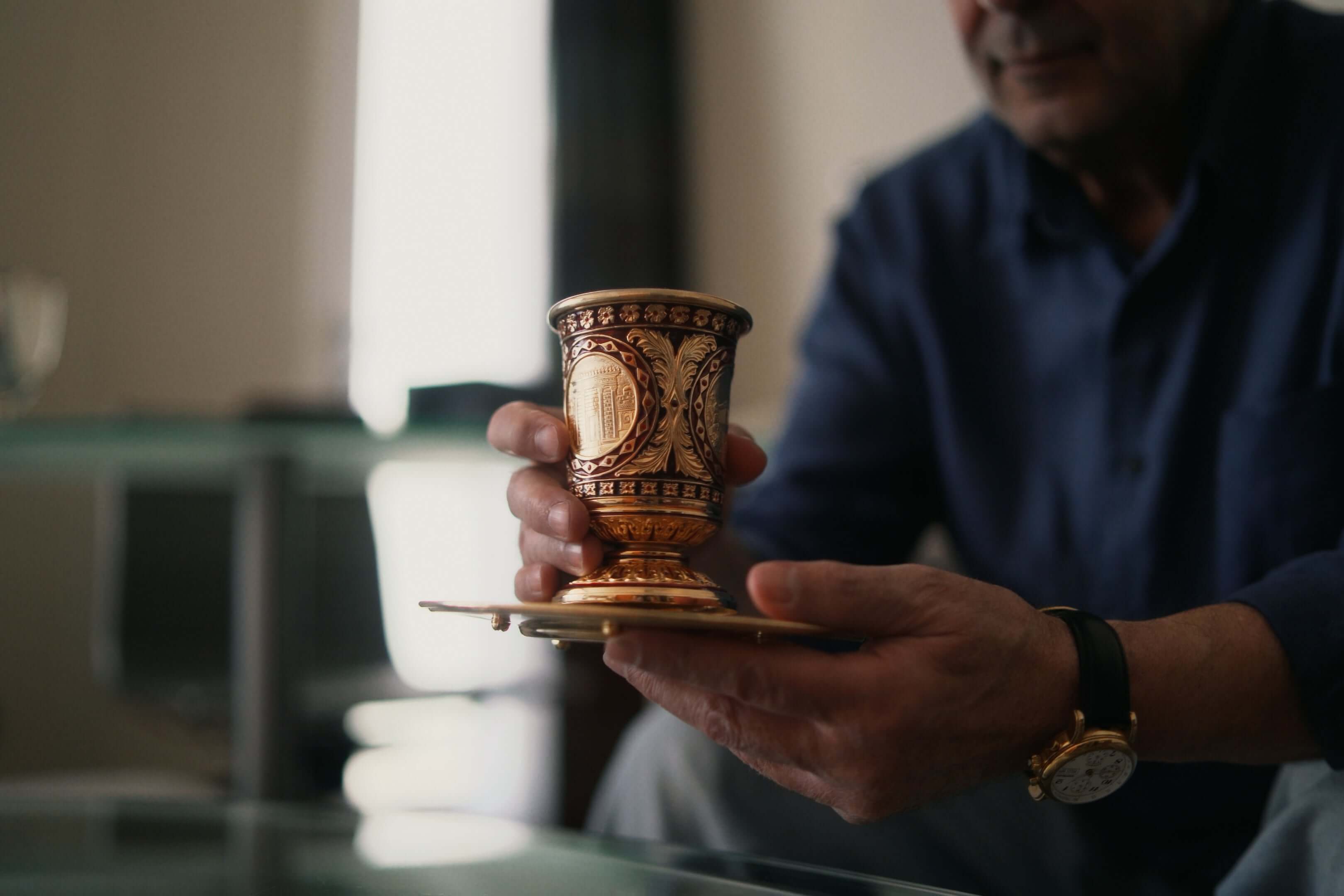
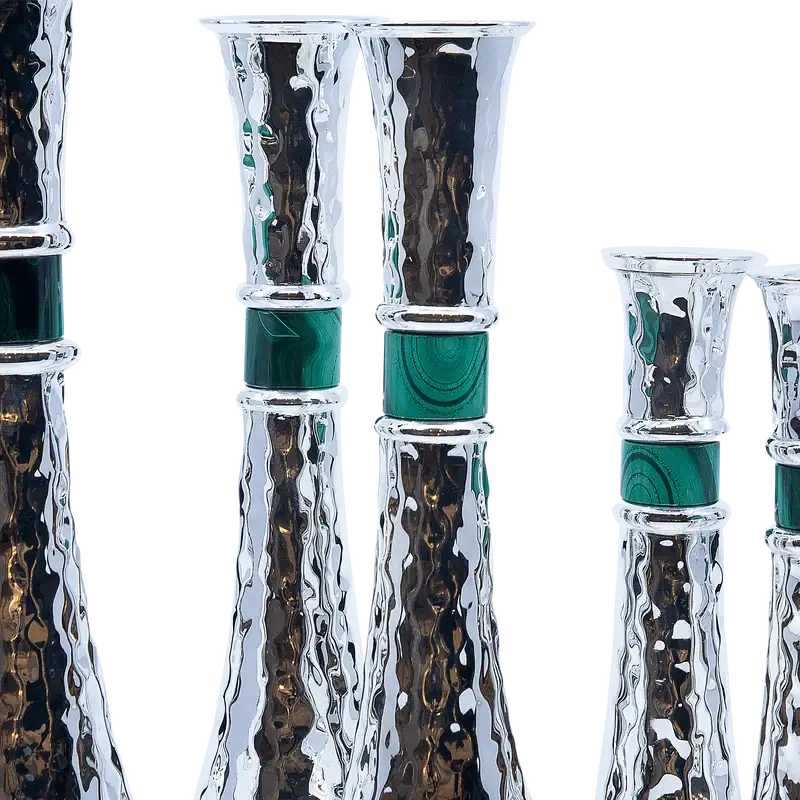
The most successful pieces are often the most disciplined. A Kiddush cup may be enriched by subtle engraving, a sculptural stem, or an elegantly weighted base. A menorah may draw from classical forms or contemporary architecture. A mezuzah case can feel deeply personal while still retaining the dignity of a sacred object. In each case, restraint is part of the artistry.
Exclusivity also matters, though not in a loud way. A one-of-a-kind commission should never feel like a standard design with a name added at the end. It should reflect genuine collaboration, where symbolism, use, scale, and setting have all been considered. That is what separates bespoke work from expensive merchandise.
The custom judaica commission process
A refined commission process begins with conversation, not catalog language. The most important questions are rarely about dimensions alone. They are about purpose. Is the piece intended for a young couple beginning a home, a synagogue presentation, a milestone birthday, or a collector seeking a centerpiece with museum-level presence? Each intention leads to a different design path.
From there, form takes shape through dialogue. Some clients arrive with a clear visual point of view. Others know only the occasion and the feeling they want the piece to hold. Both approaches can lead to extraordinary work. What matters is the ability to translate instinct, memory, and ritual significance into silver with precision.
Material choice, finish, engraving, silhouette, and scale all deserve careful thought. A wine fountain made for large family gatherings must perform beautifully as well as command attention. Candlesticks designed for weekly use may call for a balance between sculptural elegance and practical stability. A ceremonial presentation piece might allow for more elaborate expression than an object handled often.
This is also where experience becomes visible. An accomplished maker understands what can be designed beautifully on paper and what will actually endure in the hand, on the table, and across decades of use. That knowledge protects the integrity of the piece.
What clients often choose to personalize
In a custom judaica commission, personalization is most compelling when it is integrated rather than applied. Engraved names and dates remain timeless, but they are only one approach. Families often respond to details that carry private meaning without announcing themselves immediately.
A motif drawn from Jerusalem stone, the geometry of a beloved home, the rhythm of old-world filigree, or a sleek contemporary profile can all become part of the language of the piece. Some clients want a wedding gift that feels unmistakably modern. Others want a grand, traditional form worthy of a formal dining table and future generations. Neither is more valid. It depends on how the family lives with ritual and beauty.
Hebrew inscriptions can be especially powerful when handled with discretion and refinement. A verse, blessing, or dedication can transform an already beautiful object into a personal testimony. The key is proportion. The inscription should support the design, not compete with it.
Which pieces are most often commissioned
Certain categories naturally invite bespoke work because they sit at the center of family ritual. Kiddush cups remain among the most commissioned pieces because they are intimate, gifted often, and closely tied to life-cycle moments. Menorahs and Shabbat candlesticks are also frequent choices, especially for clients who want a focal point in the home that carries both sculptural presence and sacred significance.
Mezuzah cases are often commissioned for new homes, renovations, and meaningful gifts. Their appeal lies in the way they unite faith, architecture, and personal expression in a single object. Silver table accessories and presentation pieces also lend themselves to commissions when a client wants a full ceremonial setting rather than one signature item.
Then there are the truly personal projects - an heirloom recreated from memory, a synagogue gift designed to honor a family name, or a wedding commission intended to begin a new lineage. These are often the most moving because they ask the maker to interpret not just taste, but legacy.
When bespoke is the right choice - and when it may not be
A commission is not always the right path, and knowing that is part of luxury service. If the need is immediate, or if a client prefers to choose from a resolved collection without entering a collaborative process, an existing masterpiece may be the better fit. There is a certain pleasure in recognizing the perfect finished piece and knowing it is already complete.
A bespoke project asks for patience and clarity. It rewards clients who care about authorship, detail, symbolism, and the long life of the object. It may not suit someone seeking speed, low cost, or trend-driven novelty. Commissioned Judaica belongs to a different category of decision-making. It is closer to collecting than shopping.
That is precisely why it holds its value emotionally. The piece is tied to a moment, a relationship, and a maker’s hand. In the best cases, it becomes part of family language. People do not simply admire it. They refer to it, remember who gave it, and imagine who will receive it next.
Choosing the right maker for a custom judaica commission
The maker matters as much as the design brief. In sacred silverwork, technical skill alone is not enough. The artisan must understand ritual use, proportion, symbolism, and the difference between decoration and meaning. They must be able to listen carefully, guide confidently, and edit with discipline.
This is why families and collectors seek out established masters rather than general luxury workshops. A commissioned Judaica piece must belong to a lineage of craftsmanship, not just a moment of design fashion. The hand behind it should bring authority, sensitivity, and a clear artistic signature.
For clients seeking that level of work, Piece by Zion Hadad represents a rare proposition: second-generation mastery, exceptional sterling silver craftsmanship, and a bespoke process shaped by cultural authenticity as much as aesthetic refinement. The result is not simply a personalized object, but a creation worthy of inheritance.
A legacy made visible
The most memorable Judaica in a home is rarely memorable because it is expensive. It is memorable because it feels alive with intention. It catches candlelight in a certain way. It returns every Shabbat and holiday with quiet authority. It becomes part of how a family sees itself.
That is the enduring appeal of commission work. It gives form to values that are otherwise difficult to hold - continuity, gratitude, reverence, joy, memory. In silver, these qualities become tangible. They take their place on the table, at the doorway, and in the hands of the next generation.
If a ritual object is meant to stay with your family for decades, it should be made with the same seriousness as the legacy you hope it will carry.